What to Know About Pathway Lighting Before Halloween Night
Shiny Green Landscaping • October 6, 2026
Dark autumn evenings mean your front walkways become invisible trip hazards just in time for Halloween. At Shiny Green Landscaping we constantly see homeowners scrambling to fix dark paths with cheap plastic spike lights right before the trick or treaters arrive. Those quick fixes rarely survive the first frost or provide enough actual illumination to keep people safe during the long winter.
Taking the time to install professional hardwired landscape lighting solves the visibility problem permanently. A proper low voltage setup cuts through the dark and highlights your property features without relying on unpredictable autumn sunshine. Knowing what to look for before you hire a crew ensures you get a system that survives the heavy weather ahead.
What We Cover:
- Hardwired Over Solar for Autumn Realities
- Proper Walkway Illumination Layouts
- Red Flags in Lighting Quotes
- Questions to Ask Before You Hire
Hardwired Over Solar for Autumn Realities
Homeowners often try to save money by purchasing a dozen solar lights from the hardware store. While these work fine in the peak of July they fail miserably by late October. In areas like West Galt in Cambridge where mature street trees cast heavy shadows the solar panels simply do not receive enough direct sunlight to charge fully.
When you factor in the dropping temperatures those cheap batteries lose their ability to hold whatever small charge they managed to collect.
• Battery Drain: Cold autumn nights destroy the storage capacity of consumer grade solar batteries very quickly.
• Output Drops: As the battery struggles the LED brightness fades to a dull glow long before midnight.
• Material Failures: Flimsy plastic ground spikes crack and snap the moment the topsoil begins to freeze.
→ From a professional standpoint: Hardwired low voltage systems guarantee consistent and bright output regardless of cloud cover or freezing temperatures.
Proper Walkway Illumination Layouts
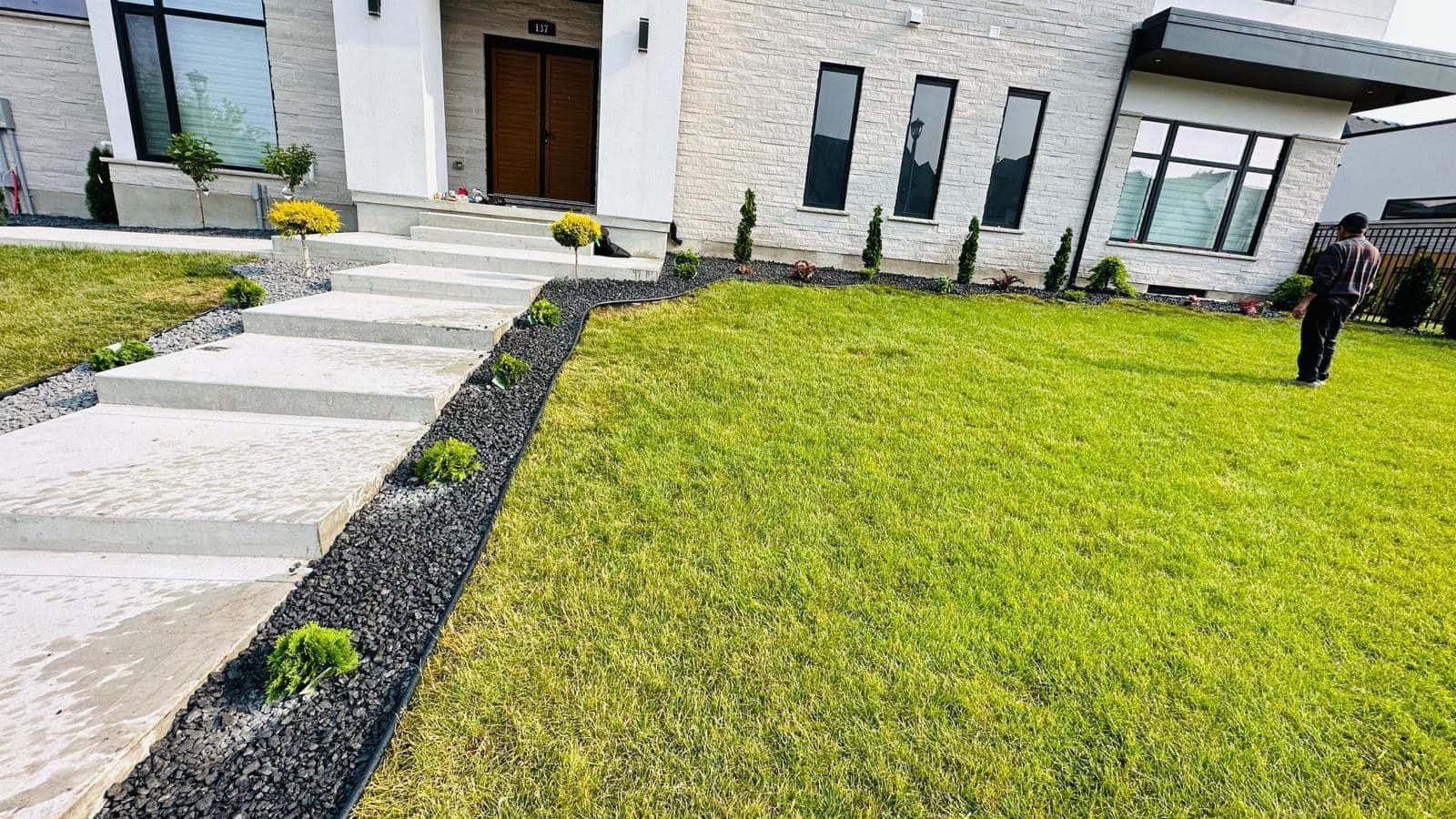
If you recently invested in new pavers or stonework you want people to clearly see where they are stepping. Sticking lights randomly into the mulch creates blinding hot spots and leaves dark dangerous gaps along the path.
Lighting up a walkway requires a strategic approach to ensure the ground is visible without blinding your guests as they walk up to the front door.
What is the best spacing for outdoor pathway lights?
The industry standard for pathway illumination requires placing fixtures roughly six to eight feet apart. You want the pools of light to slightly overlap on the ground so there are no dark patches where a guest could trip over a rogue paving stone or a wet pile of leaves. Instead of lining them up perfectly straight on both sides of the walk you should stagger the fixtures in a zigzag pattern to create a wider and more inviting path of light.
Red Flags in Lighting Quotes
Before you sign a contract you need to know exactly how the contractor plans to build the system. Cut corner installers often leave properties with dimming lights and exposed wires that become immediate tripping hazards.
Protecting your investment means knowing the difference between a professional installation and a rushed weekend job.
• Shallow Trenching: Wires must be buried at least six inches deep to avoid being sliced by future garden maintenance or snow shovels.
• Ignoring Voltage Drop: Contractors who chain too many lights on a single wire run will leave the fixtures at the end looking noticeably dim.
• Cheap Fixtures: Bids that use painted aluminum or thin plastic housings instead of solid brass will corrode within two harsh Ontario winters.
► The biggest red flag is an installer who cannot clearly explain how they calculate voltage drop across different lengths of buried wire.
Questions to Ask Before You Hire
Booking the right installer comes down to asking direct questions about their specific materials and methods. You need to know exactly what happens if a fixture fails or a wire gets accidentally cut next spring.
A reputable professional will gladly walk you through the technical side of the job.
• Bulb Replacements: Ask if the fixtures use integrated LED panels or replaceable drop in bulbs so you understand future repair costs.
• Color Temperature: Confirm they are installing warm white bulbs in the 2700K range rather than harsh blue surgical lighting.
• System Expansion: Question whether the installed transformer has extra wattage capacity in case you want to add lights to your retaining walls next year.
→ A quick tip to remember: Always ensure your contractor leaves a waterproof junction box with extra wire slack to allow for future adjustments as your plants grow.
Keep Your Property Safe After Dark
Halloween brings the highest amount of foot traffic your front yard will see all year. Getting a professional hardwired setup installed now guarantees every visitor can navigate your steps and walkways safely. Reach out to our crew to review your property layout and get a reliable lighting system in place before the longest nights of the year arrive.
Share This Blog