Why Store-Bought Landscape Lighting Fails in Ontario Winters
Shiny Green Landscaping • November 10, 2026
Ontario winters are notoriously hard on outdoor fixtures of any kind. Many property owners install cheap solar lights in the spring only to watch them fail completely by January. The technicians at Shiny Green Landscaping constantly replace cracked plastic stakes and dead fixtures that simply could not survive the freezing temperatures. Understanding the mechanical differences between retail products and professional systems saves you money and frustration in the long run.
A reliable outdoor lighting setup is crucial for keeping your pathways safe during the dark winter months. When the sun sets at five in the afternoon you need consistent illumination to prevent slips and falls on icy walkways. Relying on inferior products creates a serious safety hazard just when you need visibility the most. Trade professionals approach property lighting from a completely different structural perspective.
In this article:
● Battery failure: Why cold weather destroys solar storage.
● Material degradation: How frost shatters plastic housings.
● Professional alternatives: The mechanics of hardwired systems.
● Consistent performance: Keeping your property safe year round.
Why Cold Weather Destroys Solar Storage
People frequently ask why did my outdoor solar lights stop working in winter. The answer comes down to basic battery chemistry and sunlight availability. Store-bought solar units rely on small rechargeable batteries that are highly sensitive to temperature drops. When the thermometer dips below freezing the chemical reactions inside these cheap batteries slow down drastically and prevent them from holding a charge.
Furthermore the shorter days and constant cloud cover in Ontario mean the small solar panels never receive enough direct sunlight to fully charge the unit. Even if the battery was functioning perfectly it simply lacks the fuel to stay lit for more than an hour or two. Snow accumulation on top of the small panels completely blocks any remaining light from reaching the sensors.
How Frost Shatters Plastic Housings
Retail path lights are typically manufactured using thin plastics and cheap metals to keep the purchase price low. These materials are not engineered to withstand extreme temperature fluctuations. When moisture seeps into the seams of a plastic light housing and freezes it expands with enough force to crack the casing wide open.
Once the housing is compromised melting snow and winter rain short out the internal wiring instantly. Even the ground stakes suffer in the cold. Frost heave pushes the lightweight stakes right out of the soil leaving your pathway lights tilted or completely uprooted by the middle of February.
The Mechanics of Hardwired Landscape Lighting
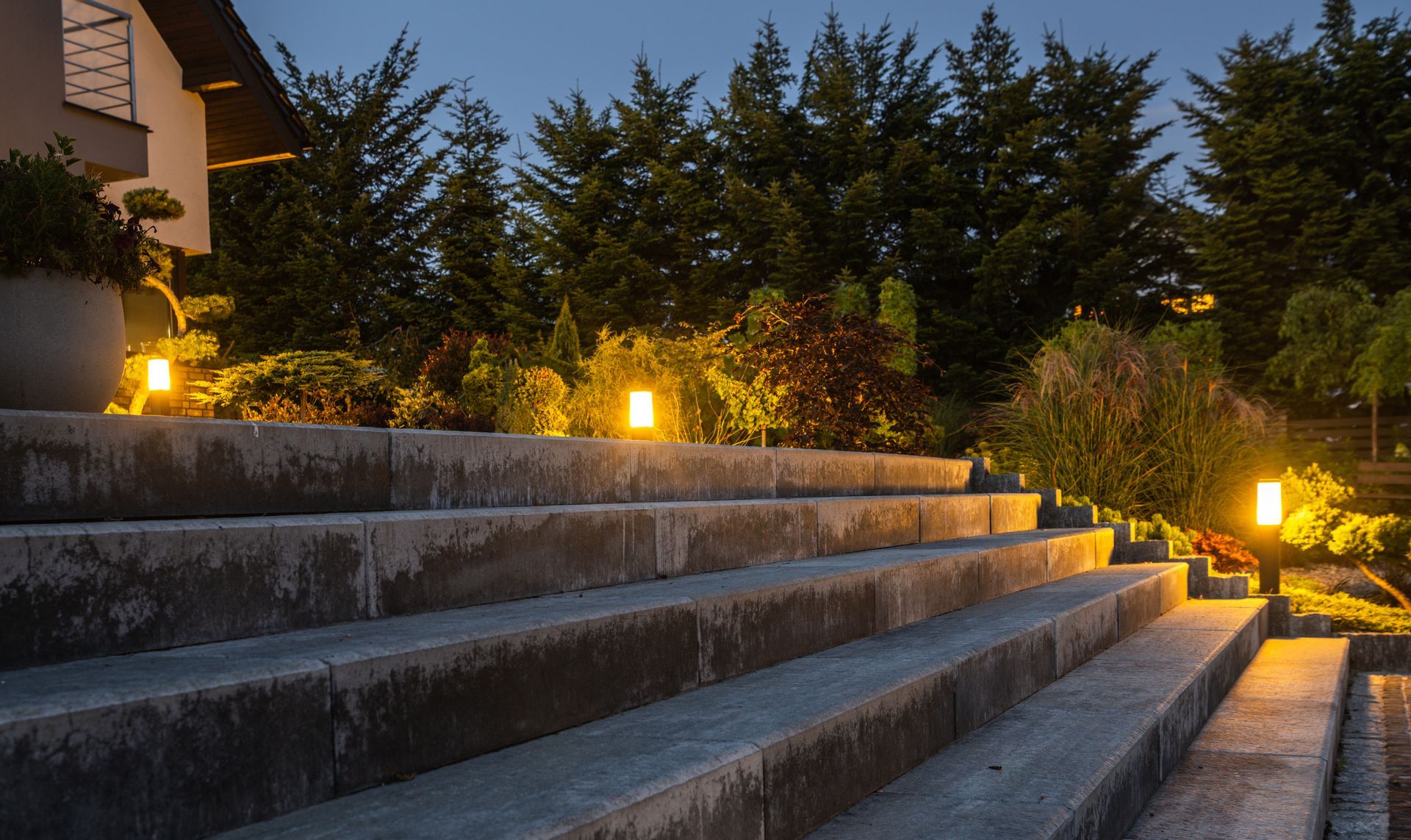
Professional installers avoid solar path lights entirely and rely on low voltage hardwired systems. These fixtures run off a central transformer that plugs directly into your home power supply. Because they do not rely on solar charging or internal batteries they turn on reliably every single night regardless of the temperature or weather conditions.
Trade quality fixtures are constructed from heavy cast brass or thick aluminum. These solid metal housings are sealed with rubber gaskets that keep out freezing moisture permanently. The wiring is buried safely below the frost line or protected within conduit to ensure the connection remains secure throughout the harshest freezing cycles.
Investing in Year Round Visibility
Failing pathway lights leave your property dark and dangerous during the longest nights of the year. Replacing broken plastic fixtures every single spring costs more over time than installing a proper system once. Contact a professional to discuss a hardwired lighting layout that will actually survive the winter.
Share This Blog